Apple isn’t just iterating — it’s accelerating. For years, rumors have swirled about an ambitious "ultra" roadmap, a strategic push to redefine not just gadgets, but ecosystems. Now, that roadmap is no longer speculation. Internal leaks, patent filings, and strategic hires confirm Apple is preparing a wave of devices and upgrades that go beyond the annual refresh cycle. The next phase includes not only redesigned iPhones and MacBook models powered by next-gen silicon but also long-rumored products like augmented reality glasses and a standalone Apple AI platform. This isn’t a product launch. It’s a platform shift.
The Core of Apple’s Ultra Roadmap: More Than Just New Devices
At its heart, Apple’s ultra roadmap is about vertical integration. The company is tightening control over hardware, software, and silicon to lock in performance, privacy, and user experience. Unlike competitors relying on third-party processors or fragmented OS updates, Apple designs every layer — from the M-series chips to the Neural Engine in iOS 18. This control allows for features like on-device AI processing, which will power everything from real-time language translation to predictive typing without compromising user data.
What’s different now is scale. Apple isn’t releasing one breakthrough product every few years. It’s synchronizing hardware launches across categories. The iPhone 16 Pro is expected to debut with a new A18 Pro chip optimized for AI tasks, while the next MacBook Pro lineup will run on the M5 chip — rumored to offer up to 40% better performance and 30% improved efficiency over the M3. These aren’t isolated upgrades. They’re part of a unified architecture that makes devices faster, more responsive, and more intelligent together.
iPhone 16 Series: AI, Design, and Camera Breakthroughs
The iPhone 16 lineup is the most anticipated element of Apple’s ultra roadmap. Early prototypes suggest a design shift: a longer vertical camera module on Pro models to accommodate a periscope telephoto lens with 5x or higher optical zoom. Engineers are also testing a “capture button” — a dedicated, capacitive input for video recording, likely aimed at creators and vloggers.
But the real transformation is under the hood. The A18 Pro chip, built on TSMC’s second-generation 3nm process (N3E), will enable on-device generative AI. Think: summarizing long emails, creating personalized replies, or editing photos using natural language prompts — all without sending data to the cloud. iOS 18’s AI framework, internally referred to as "Apple Intelligence," will leverage this chip to offer contextual actions, like automatically organizing photos by event, person, or location with near-perfect accuracy.
One limitation: battery life. Running AI models locally demands significant power. Apple is countering with larger batteries in the iPhone 16 Pro Max (up to 5,000 mAh) and a new thermal architecture to manage heat during sustained workloads. Don’t expect AI features to roll out all at once — Apple will likely phase them in, starting with core utilities and expanding to third-party apps via API access.
MacBook Evolution: M5 Chips and AI-Driven Workflows
The MacBook upgrade cycle is also accelerating. The M5 chip family — expected in late 2025 — will bring architectural improvements that benefit both performance and battery life. Benchmarks from early engineering samples suggest single-core performance gains of 25% and multi-core boosts of up to 35% over the M3, thanks to a wider CPU execution pipeline and enhanced GPU compute units.
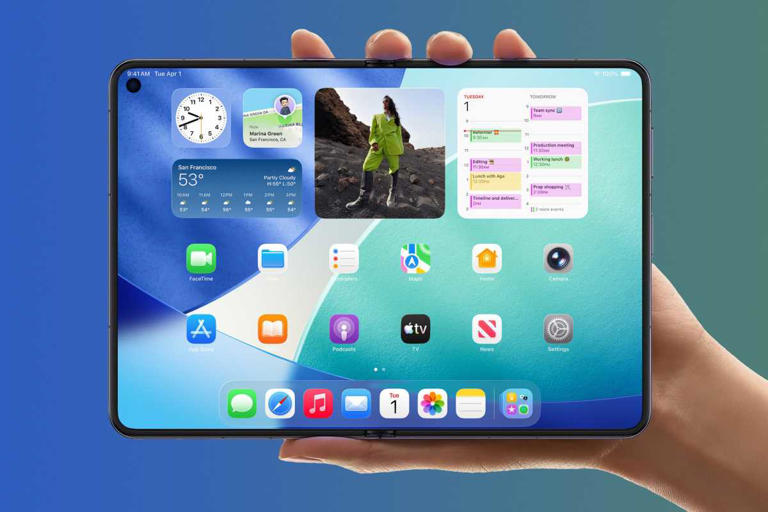
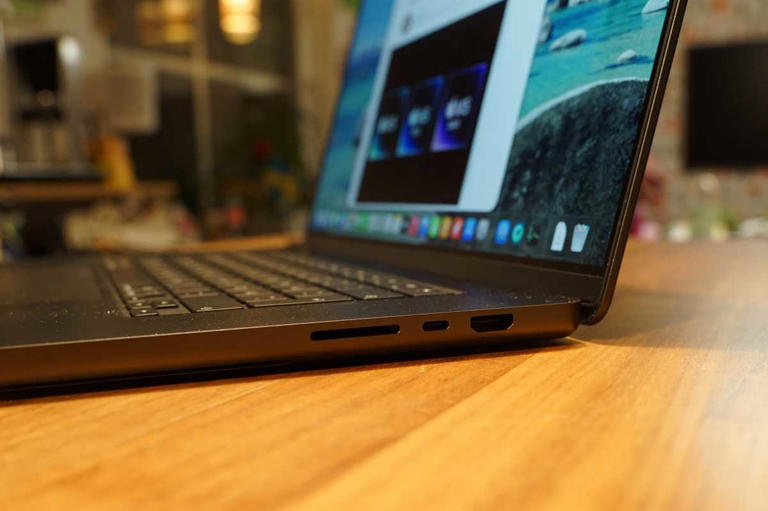
Design changes are subtle but meaningful. Apple is testing a thinner bezel around the MacBook Pro’s display, allowing for a larger screen in the same chassis. The 14-inch model could grow to 14.3 inches, while the 16-inch may expand to 16.2. More importantly, macOS 15 (codenamed “Sequoia”) will integrate deeply with on-device AI. Developers can already test a new "GenUI" framework that enables AI-powered features like auto-generating code comments, summarizing long documents, and even filling out web forms based on user preferences.
For professionals, the M5-powered MacBook Pro will support up to three external 8K displays — a major leap for video editors and 3D artists. The M5X variant, expected in high-end models, may include up to 128GB of unified memory, making it viable for AI training workflows and large-scale data modeling.
Common mistake: assuming AI on Mac is just about automation. Apple’s approach is subtler. It’s about reducing friction — for example, letting users draft a presentation outline via voice, then auto-populating slides with relevant images and data from their iCloud library.
Apple Vision Pro: The Foundation of a Spatial Ecosystem
The Apple Vision Pro isn’t just a headset — it’s the cornerstone of Apple’s spatial computing strategy. While initial sales were limited by price ($3,499) and app availability, the ultra roadmap includes a clear path to mainstream adoption. A lower-cost Vision Pro Lite is in development, expected in 2026, with a price target below $2,000. It will use a hybrid optical system (instead of the current micro-OLED displays) and a modified R1 chip to reduce costs without sacrificing core functionality.
More importantly, Apple is building a spatial OS layer that will eventually extend to iPhones and Macs. Features like “EyeType” — text input via eye tracking — could migrate to future iPhones, letting users compose messages hands-free. Apps built for Vision Pro are already adopting 3D UI patterns that may influence iOS and macOS design in the coming years.
Use case: surgeons using Vision Pro for 3D anatomy overlays during procedures, or architects walking clients through virtual buildings before construction begins. These aren’t hypotheticals — they’re being tested in pilot programs with hospitals and design firms.
The AR Glasses Project: What We Know
Long rumored, rarely seen — Apple’s AR glasses project, codenamed “Ava,” is now confirmed to be in advanced prototyping. Unlike Vision Pro, these glasses aim for everyday wear: lightweight frames, prescription lens compatibility, and real-time AR overlays powered by a connected iPhone or an upcoming Apple AI chip.
The first model won’t replace the iPhone. Instead, it will offer contextual assistance — navigation cues projected on sidewalks, live translation of foreign text, or identifying people and objects in your field of view (with privacy safeguards). Early testers report a narrow field of view (around 40 degrees), but Apple is working with Carl Zeiss to develop waveguide lenses that could double that by 2027.
One major limitation: battery life. Current prototypes last only 90 minutes under heavy AR use. Apple is exploring micro-battery solutions and power-sharing with the iPhone to extend runtime. Don’t expect full standalone functionality at launch — the glasses will likely require constant iPhone pairing, much like Apple Watch.
Apple Watch and AirPods: Smarter, Not Just Smaller
Even Apple’s smaller devices are getting AI upgrades. The Apple Watch Series 10 will feature a new S10 chip with enhanced neural processing for health monitoring. Leaks suggest it will detect early signs of respiratory illness via subtle changes in breathing patterns and blood oxygen levels. It may also add a skin temperature sensor for fertility tracking and sleep quality analysis.
AirPods Pro 3, expected in late 2025, will include beamforming mics optimized for AI voice assistants. With on-device speech recognition, users could trigger complex workflows — “Remind me to call Mom when I leave work” — without saying “Hey Siri.” The new H3 chip will also enable spatial audio that adapts in real time to head movement, even during phone calls.
Workflow tip: Pair AirPods Pro 3 with Vision Pro for immersive audio-visual meetings, or use them with iPhone 16 to offload voice processing during video recordings.
The M5 Chip: Powering the Entire Ecosystem
The M5 chip isn’t just for MacBooks. It’s designed to scale across devices. A smaller variant, possibly called M5E, could power the next iPad Pro and even an AI-focused home hub. The chip’s Neural Engine is expected to handle up to 35 trillion operations per second — double the M3’s capacity — enabling real-time video summarization, object detection, and voice synthesis.
Apple is also developing a custom AI training chip for data centers, which could support future iCloud AI services. This would allow Apple to train large language models on anonymized, aggregated data while keeping personal information on-device — a key differentiator from Google and Meta.
What’s Next: Launch Timeline and Strategic Implications
Apple’s ultra roadmap isn’t a one-year plan. It’s a multi-year vision with key milestones:
- Late 2024: iPhone 16 series launch with A18 Pro and iOS 18 AI features
- Early 2025: Updated MacBook Air with M4 chip (stepping stone to M5)
- Mid-2025: Vision Pro gains hand-tracking and third-party app support
- Late 2025: MacBook Pro with M5 chip and macOS 15
- 2026: Vision Pro Lite and AirPods Pro 3
- 2027: AR glasses (Ava) launch, potentially alongside an Apple AI hub
The strategic goal is clear: deepen ecosystem lock-in. The more devices a user owns, the more seamless and intelligent the experience becomes. An iPhone 16 can offload AI tasks to a nearby M5 MacBook. Vision Pro can mirror iPhone notifications in 3D space. AR glasses can pull data from Apple Watch health sensors.
But challenges remain. Privacy concerns will intensify as AI systems collect more behavioral data. Apple must balance innovation with transparency — or risk regulatory scrutiny in the EU and U.S. Additionally, manufacturing complexity could delay some products, especially the AR glasses, which require precision optics not yet mass-producible.
Prepare for the Shift
Apple’s ultra roadmap is real, and it’s accelerating. Whether you’re a developer, creator, or everyday user, the next two years will bring tools that are faster, smarter, and more integrated than ever. The key is to anticipate how these devices work together — not just what they do alone. Start exploring iOS 18’s AI features, consider how spatial apps could transform your workflow, and think about the role of on-device intelligence in your digital life.
Adapt early. The future isn’t just coming — it’s being engineered in Cupertino.
FAQ
Will the iPhone 16 have a USB-C port? Yes, it will retain the USB-C port introduced in iPhone 15, with faster data transfer speeds (USB 3.2 or Thunderbolt).
Is the M5 chip coming to iPads? Likely — a variant of the M5 is expected in the next iPad Pro, offering improved performance for creative apps.
Can Vision Pro work without an iPhone? Yes, it’s a standalone device, though it pairs with iPhone for setup and some features.
Will AR glasses replace the iPhone? No — they’re designed as a companion device, not a replacement, especially in early versions.
Does Apple’s on-device AI use cloud processing? For basic tasks, no. Complex requests may use iCloud Private Cloud Compute, but personal data isn’t stored.
Will MacBook Air get the M5 chip? The MacBook Air will likely get an M4 chip first, with M5 arriving in later models.
Are there new colors for iPhone 16? Leaks suggest a titanium finish for Pro models and new matte options, but official colors will be announced at launch.
FAQ
What should you look for in Apple’s Ultra Roadmap Confirmed: iPhone, MacBook and More? Focus on relevance, practical value, and how well the solution matches real user intent.
Is Apple’s Ultra Roadmap Confirmed: iPhone, MacBook and More suitable for beginners? That depends on the workflow, but a clear step-by-step approach usually makes it easier to start.
How do you compare options around Apple’s Ultra Roadmap Confirmed: iPhone, MacBook and More? Compare features, trust signals, limitations, pricing, and ease of implementation.
What mistakes should you avoid? Avoid generic choices, weak validation, and decisions based only on marketing claims.
What is the next best step? Shortlist the most relevant options, validate them quickly, and refine from real-world results.